Evolving El Nino To Keep Monsoon At Risk

Key Takeaways
- APCC signals possible El Niño development by late July 2026.
- El Niño could suppress India’s monsoon rainfall during June–September.
- La Niña may peak in early 2026 before shifting to neutral conditions.
- Clearer ENSO signals are expected by March due to the spring barrier.
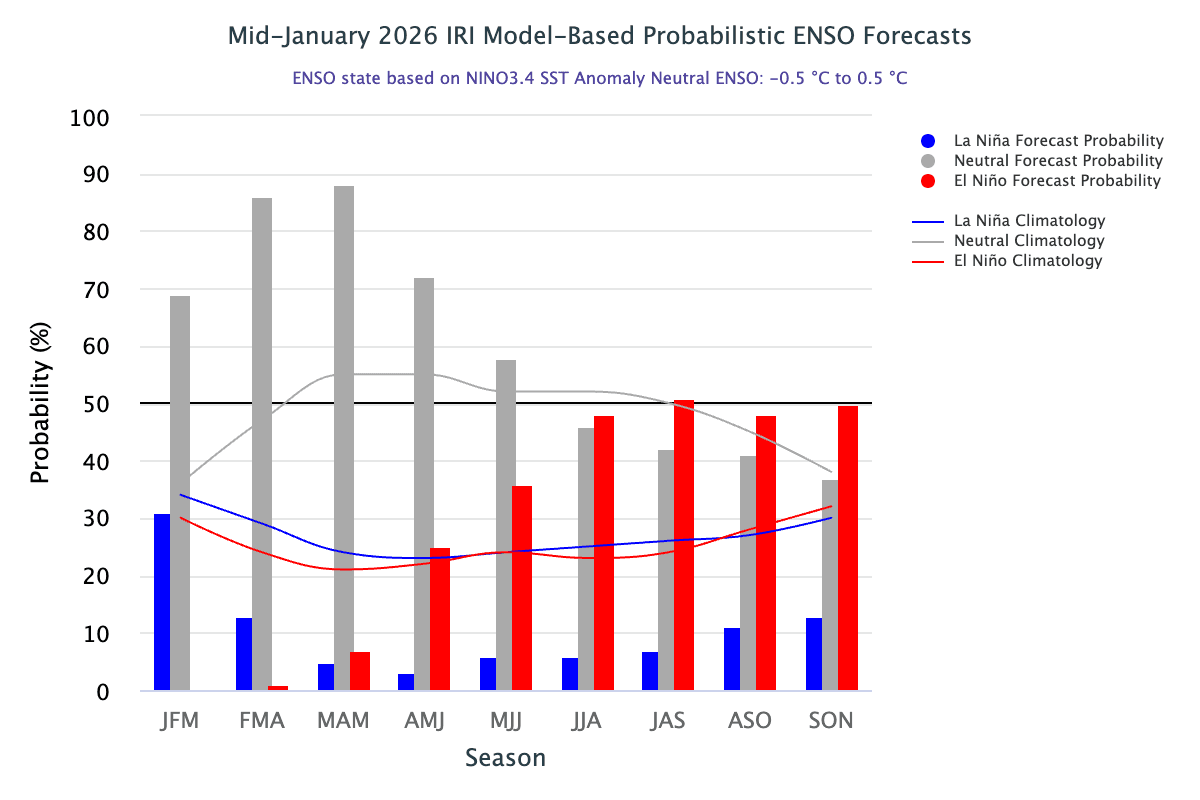
The APEC Climate Center (APCC) has announced the likely emergence of El Niño towards the end of July 2026. At the risk of repetition, Skymet was the first to share the disturbing news of an evolving El Niño with the electronic media a month ago. These findings are now being substantiated and circulated globally for wider cognisance, as the developing scenario may have far-reaching worldwide impacts.
APCC has expressed concerns that drought-bearing El Niño conditions may develop by July this year. This is expected to impact the quantum of rainfall the country receives between June and September. The infamous phenomenon is known to bring drought and prolonged dry spells across Asia, particularly India.
Historical records of such events validate the disruption of monsoon rainfall on more than one occasion. Associated complexities include late onset of the monsoon, prolonged dry spells, lopsided rainfall distribution, and above-normal temperatures.
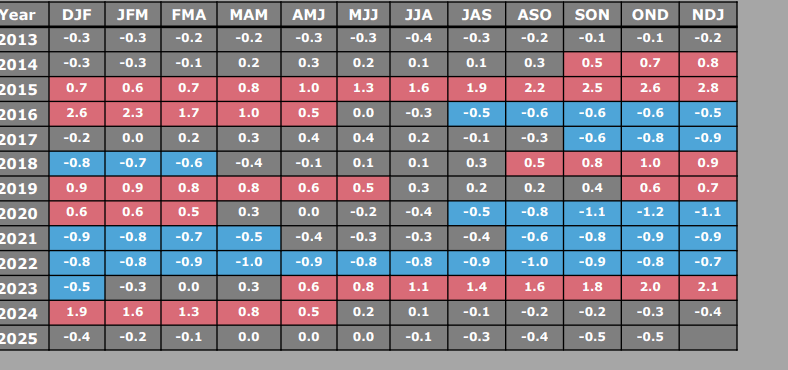
As per an agri-business report, El Niño emerged in June 2023 and persisted for nearly 11 months, severely impacting the Indian monsoon. The event also contributed to 2024 becoming the warmest year on record, as El Niño conditions continued until April 2024. Crop output, particularly paddy and pulses, suffered, leading to lower production and triggering inflationary pressures.
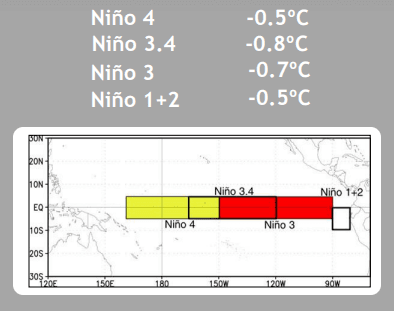
ENSO: The atmosphere and ocean appear to have aligned favourably during January 2026, supporting weak La Niña conditions. In December 2025, the Southern Oscillation Index (SOI) stood at 0.1, while the Equatorial SOI was 0.9, indicating a mismatch between the two indices. However, the most recent 30-day SOI value, ending 18 January 2026, firmly falls within the La Niña domain.
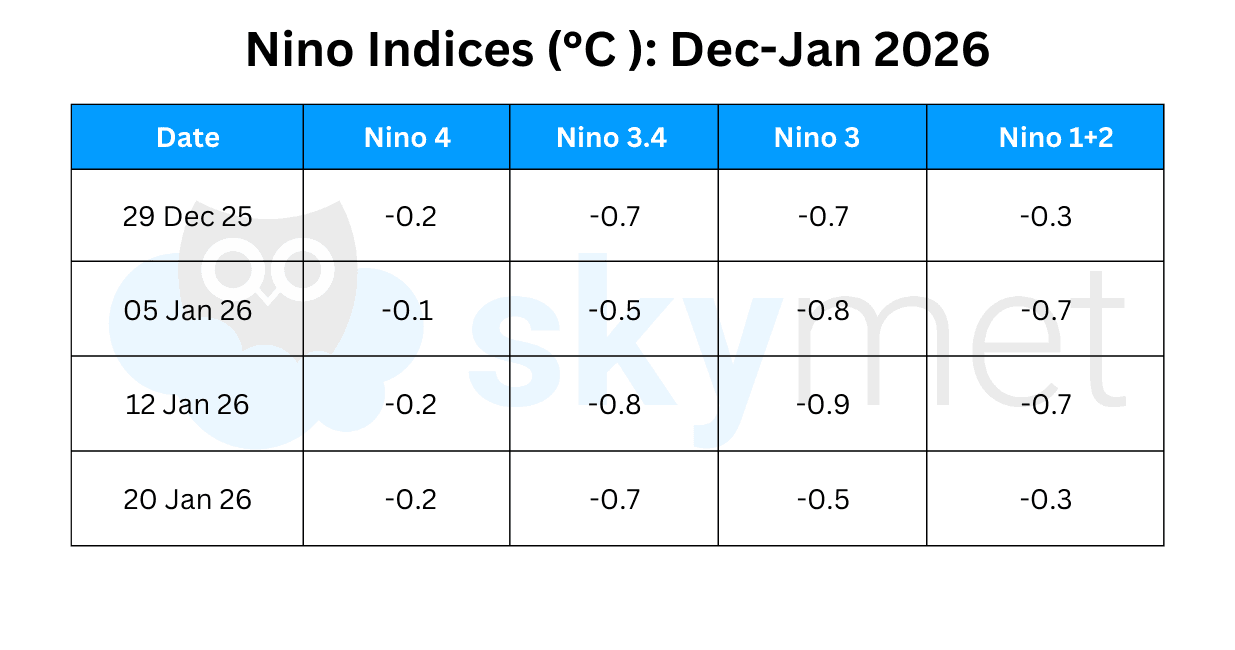
The Niño 3.4 index has consistently remained at –0.5°C or below for the past 14 weeks, since 20 October 2025. Consequently, the Oceanic Niño Index (ONI) for the last two quarters (Sep–Oct–Nov and Oct–Nov–Dec) has met the threshold of –0.5°C. As per Skymet estimates, the ONI for the Nov–Dec–Jan quarter is likely to range between –0.6°C and –0.7°C, possibly marking the seasonal peak of La Niña. A gradual weakening is expected in February 2026, favouring ENSO-neutral conditions by March–April 2026.
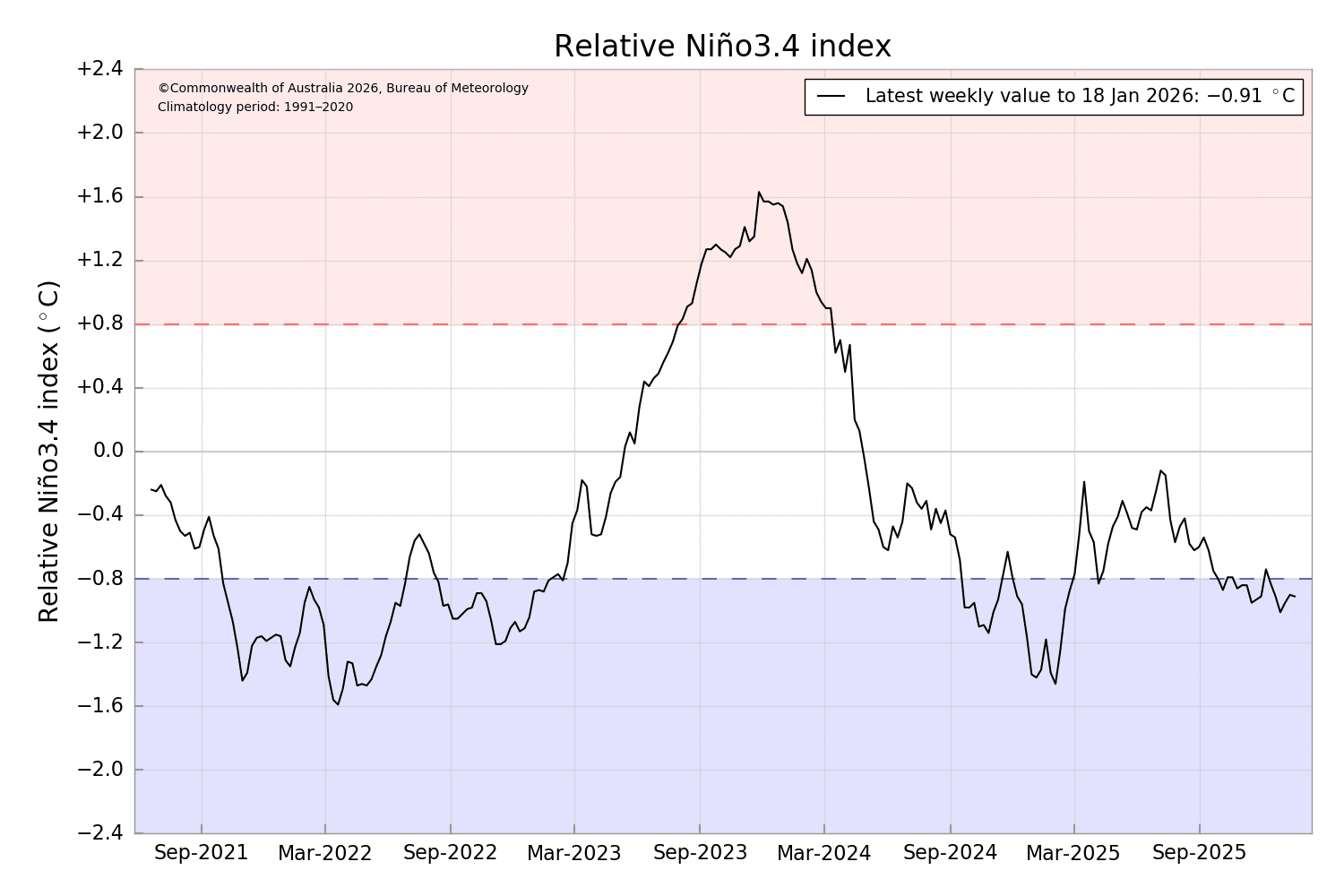
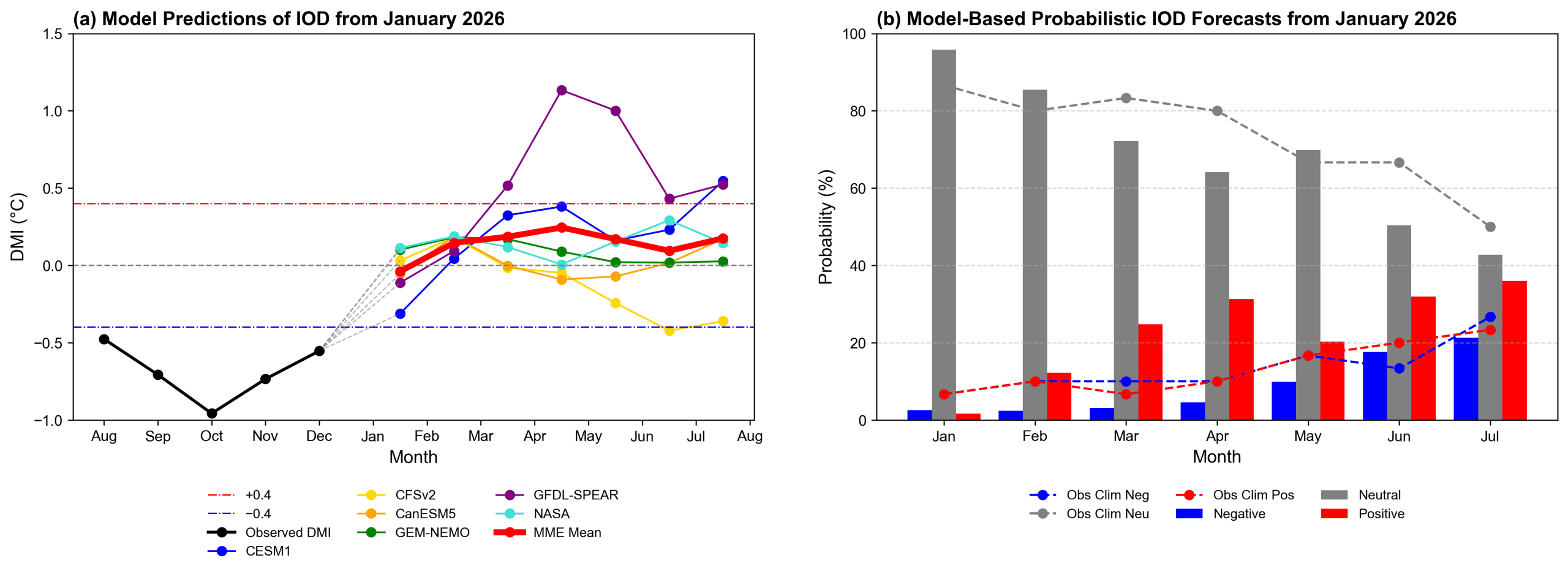
IOD: The Indian Ocean Dipole (IOD) has recorded its lowest value of the past nine weeks, with the latest index at –0.91°C for the week ending 18 January 2026. For the January–July 2026 outlook, neutral IOD conditions remain the most probable state. The predictability of the IOD declines with a lead time beyond six weeks, and the index is expected to remain largely inactive until April 2026.
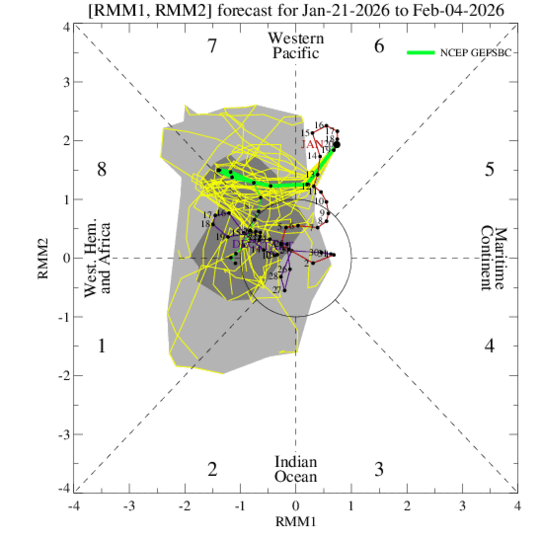
MJO: The Madden–Julian Oscillation (MJO) is currently fairly strong and oscillating over the Western Pacific, spanning Phases 6 and 7. Its eastward propagation across the Western Hemisphere is favoured. Despite its rapid movement, the MJO is expected to remain a key driver of global tropical convective anomalies over the next few weeks.
The transition from La Niña to ENSO-neutral and the subsequent build-up of El Niño will need close monitoring. Considering the spring predictability barrier, more reliable signals are expected to emerge by March 2026.