Assam and Meghalaya Weather: Rain, Lightning and Landslide Risk Ahead

Representational Image: AI-Skymet
Key Takeaways:
- Assam and Meghalaya recorded a large rainfall deficit during early March.
- Scattered rain and thunderstorms have begun across the region.
- Cyclonic circulations and Bay of Bengal moisture may increase thunderstorm activity.
- Stronger storms may affect Assam Valley, Sikkim and Sub-Himalayan West Bengal first.
Northeast rainfall deficit remains very high
Winter rainfall has remained very poor across Assam and Meghalaya this season.
Between March 1 and March 10, East and Northeast India together recorded a rainfall deficit of about 79%.
Large deficits were reported across Assam, Meghalaya and parts of Arunachal Pradesh.
Weather activity now increasing
Despite the earlier dry spell, the region has begun receiving scattered light to moderate rain and thunderstorms during the past 24 hours.
Weather conditions now suggest that pre-monsoon activity may continue across the region over the coming week.
Weather systems supporting thunderstorms
Two weather features are currently supporting rain activity.
A cyclonic circulation over Assam and Arunachal Pradesh and another circulation over Bangladesh and adjoining Gangetic West Bengal are helping develop clouds.
In addition, an anticyclonic circulation over the East Bay of Bengal and Myanmar region is pushing moist winds toward Northeast India.
This moisture supply may increase thunderstorm activity in the coming days.
Areas likely to see stronger storms
Thunderstorm activity may first affect Assam Valley, Arunachal Pradesh, Sikkim and Sub-Himalayan West Bengal.
Later, storms may extend toward Meghalaya and parts of Nagaland, Manipur, Mizoram and Tripura.
In this region, storms often become stronger during late night and early morning hours.
Lightning and landslide risks
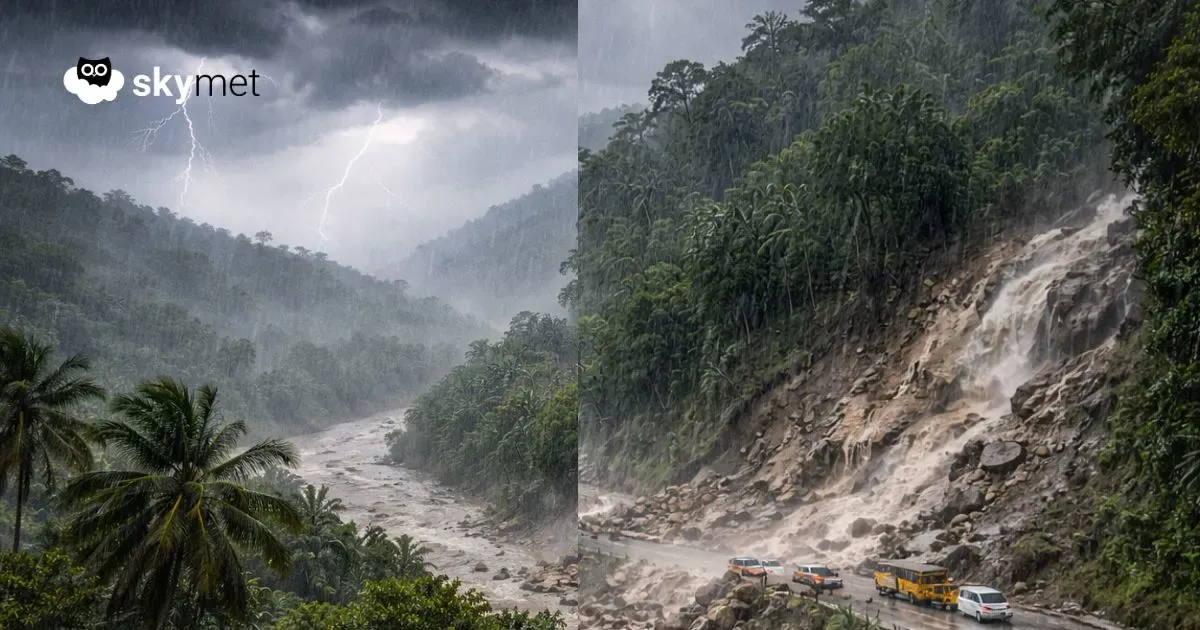
Some locations, especially Meghalaya, Sikkim and Sub-Himalayan West Bengal, often experience intense thunderstorms during the pre-monsoon season.
Strong lightning, gusty winds and heavy rain may occur at times.
In hilly areas, prolonged rain may also increase the risk of landslides and temporary road disruptions.