Why Air Quality of Delhi Dips to ‘Very Poor’ Category Once Again?

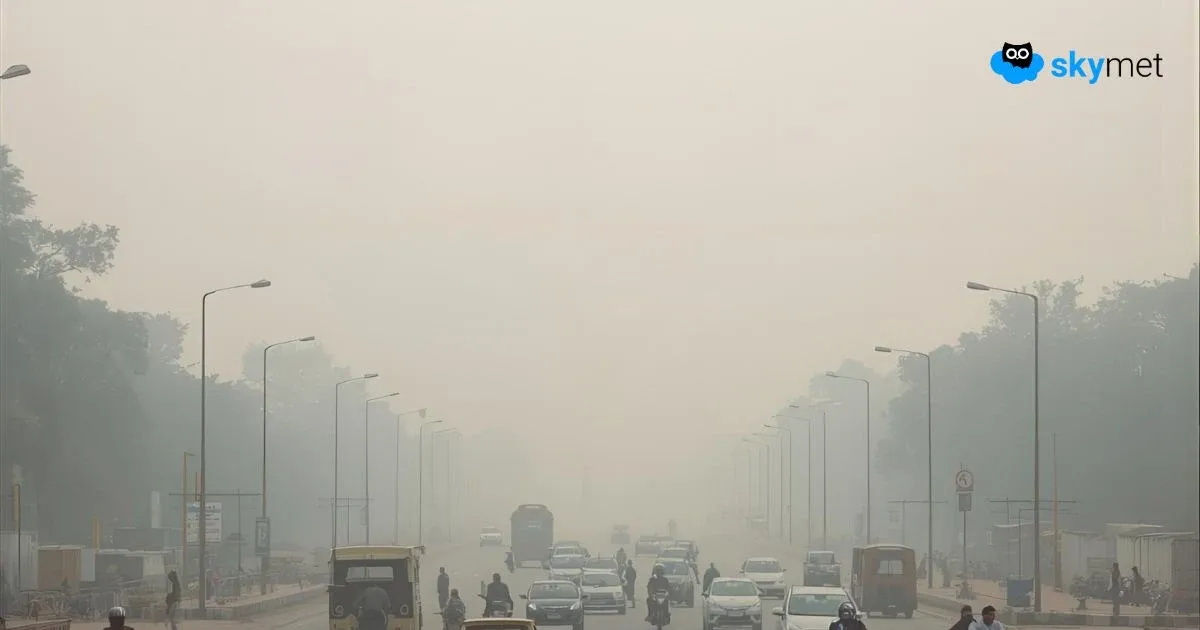
Image: AI-Skymet
Key Takeaways:
- Delhi’s AQI has slipped back into the very poor category after brief improvement.
- Reduced wind speeds due to an approaching Western Disturbance have worsened conditions.
- No rainfall is expected to provide relief over the next week.
- AQI may improve slightly after December 15 with strengthening winds.
After showing gradual improvement over the last 4–5 days, Delhi’s air quality has once again slipped into the very poor category. Earlier, most parts of the city were recording the Air Quality Index (AQI) in the poor range, aided by moderate winds blowing from the west and northwest. These winds, which continued even during the early morning and night hours, played a crucial role in dispersing pollutants. Normally, these hours experience calm or light variable winds, which favour pollutant accumulation.
Why the AQI Improved Earlier
There are two major meteorological factors that help improve air quality.
Moderate to strong winds help disperse pollutants and prevent them from settling close to the surface.
Widespread rainfall washes down suspended particles and significantly clears the atmosphere.
Over the past few days, it was primarily the presence of moderate winds that aided the temporary improvement in Delhi’s air quality.
Why the AQI Has Deteriorated Again
The improvement phase has now reversed. A Western Disturbance is approaching the Western Himalayas, and as a result, wind speeds over the northern plains—including Delhi—have reduced. Over the last 24 hours, winds remained light during the daytime and nearly calm during the night. Such conditions allow pollutants to accumulate near the surface, pushing the AQI back into the very poor range.
No Rain Relief Expected
No significant rainfall is anticipated over the plains of Northwest India during the coming week. In the absence of rain to cleanse the atmosphere, weather conditions remain unfavourable for natural pollutant removal.
When Will Conditions Improve?
Some improvement is likely from December 15 onwards, as wind speeds are expected to increase again once the Western Disturbance moves away. Stronger winds could help disperse pollutants and bring the AQI back into the poor or moderate category at some locations.
Outlook
Until then, Delhi residents may continue to experience degraded air quality, particularly during morning and evening hours. Sensitive groups—including children, the elderly, and individuals with respiratory conditions—are advised to take precautions and limit outdoor exposure during peak pollution periods.