The Deadly Indore Water Crisis: A Wake-Up Call on Water Contamination in India

Key Takeaways
- The Indore outbreak exposes serious weaknesses in urban drinking water infrastructure.
- Biological contamination remains the biggest public health risk from water in India.
- Climate change is intensifying contamination through floods, heatwaves, and erratic rainfall.
- Household-level precautions remain critical until systemic fixes are in place.
What Happened in Indore — The Numbers and the Breakdown
A deadly drinking water contamination crisis in Indore has exposed deep vulnerabilities in India’s urban water systems. Since late December 2025, at least seven people have lost their lives, while nearly 150 have been hospitalised due to acute gastrointestinal illnesses linked to contaminated tap water. By December 30 alone, more than 1,100 residents had reported symptoms such as severe diarrhoea, vomiting, abdominal pain, and dehydration.
Investigations revealed that the outbreak originated from a leak in the Bhagirthpura main water pipeline, which was found passing directly beneath a toilet structure. The breach allowed sewage to seep into the drinking water supply, introducing dangerous pathogens including E. coli, Salmonella, and Vibrio cholerae. What followed was a rapid and uncontrolled spread of water-borne disease across multiple neighbourhoods.
Emergency responses included shutting down affected water lines, supplying tankers, issuing boil-water advisories, and hospital preparedness. However, the incident triggered sharp criticism of civic authorities, particularly over aging pipelines, poor monitoring, and delayed detection. The fact that such a crisis unfolded in a major urban centre underscores a national problem, not a local failure.
Understanding Water Contamination: What It Is and Why It’s Dangerous
Water contamination occurs when harmful substances or organisms enter water, rendering it unsafe for human use. Crucially, contaminated water often appears clear, odourless, and normal-tasting, making it a silent health threat.
There are four main types of water contamination:
Biological contamination is the most widespread in India. It involves bacteria, viruses, and parasites such as E. coli, Salmonella, Vibrio cholerae, Rotavirus, and Giardia. These typically enter water through sewage leaks, overflowing drains, floodwater intrusion, or poor sanitation. This form of contamination is responsible for diseases like cholera, typhoid, hepatitis A, and acute diarrhoeal illness.
Chemical contamination includes heavy metals and compounds such as arsenic, lead, nitrates, fluoride, pesticides, and industrial effluents. Long-term exposure can lead to cancers, kidney damage, neurological disorders, and skeletal deformities.
Physical contamination refers to sediments, rust, microplastics, and suspended particles that increase turbidity. While not always immediately toxic, they often act as carriers for microbes and chemicals.
Radiological contamination, though less common, involves substances like uranium or cesium and has been detected in groundwater pockets in parts of India.
Among these, biological contamination remains the most frequent and dangerous, especially in urban outbreaks like Indore.
Where Else Are Contamination Cases Emerging Across India?
Indore is part of a growing national pattern. Between January 2025 and early 2026, over 5,500 people fell sick and at least 34 deaths were reported across 26 cities in 22 states due to contaminated tap water.
Major outbreaks and clusters have been reported from cities such as Gandhinagar, Bengaluru, Patna, Raipur, Chennai, Gurugram, and Guwahati. In Gandhinagar alone, over 150 children were affected by typhoid linked to drinking water. Bengaluru reported diarrhoeal outbreaks across dozens of households, while eastern and northeastern cities have repeatedly flagged pipeline contamination after heavy rainfall.
Groundwater contamination presents an equally alarming picture. Government data shows that over 56% of Indian districts suffer from excess nitrates, while arsenic contamination affects large parts of West Bengal and Bihar, and fluoride contamination spans multiple states nationwide.
This dual threat—urban pipeline failure and rural groundwater degradation—means contamination is no longer sporadic; it is structural.
Water Pollution vs Water Contamination: A Crucial Difference
Water pollution and water contamination are often confused, but the distinction matters.
Water pollution refers to the introduction of harmful substances into natural water bodies such as rivers, lakes, and aquifers. It is typically linked to industrial discharge, agricultural runoff, plastic waste, or untreated sewage and causes long-term ecological damage.
Water contamination, however, focuses on water quality at the point of use, especially drinking water. Water can be polluted at source yet rendered safe through treatment, or it can be clean at source and become contaminated during distribution due to leaks, low pressure, or storage failures.
The Indore crisis is a textbook case of distribution-level contamination, which is harder to detect and often more dangerous because it bypasses treatment safeguards.
Drinking Water Safety: Standards, Benchmarks, and How They’re Checked
India’s drinking water quality is governed by BIS Standard IS 10500, which sets strict limits on physical, chemical, and microbiological parameters.
Key benchmarks include:
- Zero tolerance for E. coli and faecal coliforms
- pH between 6.5 and 8.5
- Total Dissolved Solids (TDS) below 500 mg/L
- Fluoride capped at 1.5 mg/L
- Nitrates below 45 mg/L
- Turbidity under 5 NTU
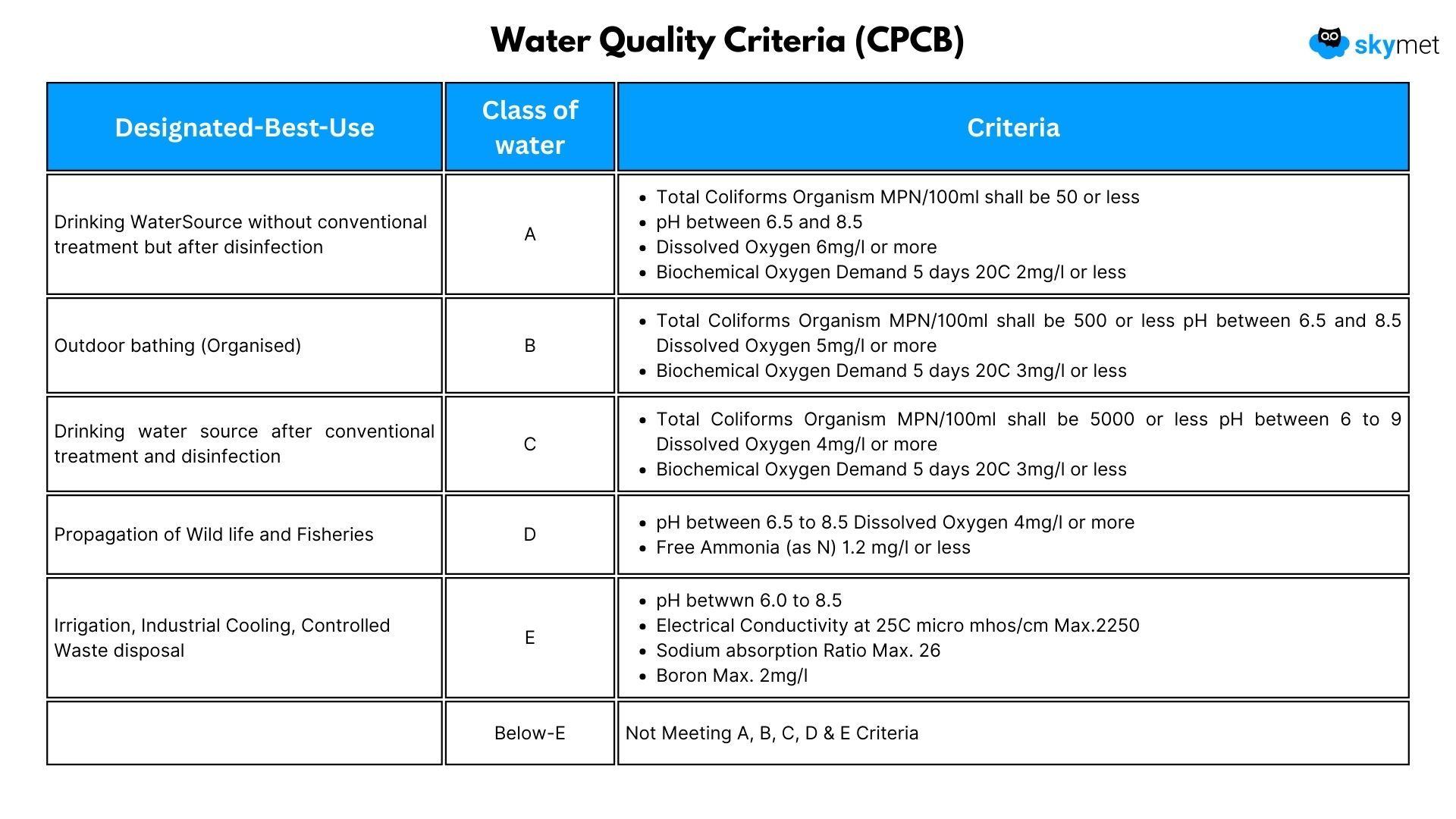
Testing is conducted through laboratory analysis of water samples, chlorine residual monitoring in pipelines, and periodic field inspections. However, many outbreaks occur between testing cycles, or in sections of the network not routinely monitored.
Households relying on borewells, tankers, or intermittent supply often fall outside formal safety checks altogether.
Why This Is an Alarming Moment for the Rest of India
Nearly 70% of disease outbreaks in India are linked to water, placing enormous strain on healthcare systems. Urban water networks—often decades old—are failing to keep pace with rapid population growth, climate stress, and demand.
Intermittent water supply systems are especially risky. When pipelines run dry, negative pressure allows sewage and contaminants to seep in through cracks. Informal settlements, high-density housing, and mixed sewer-water corridors face the greatest risk.
The Indore incident reveals how quickly a single infrastructure failure can escalate into a public health emergency.
Extreme Weather and Climate Change: Multiplying the Risk
Climate change is amplifying water contamination risks across India.
Floods overwhelm drainage systems and submerge wells and handpumps. Heatwaves accelerate bacterial growth in stored and stagnant water. Erratic monsoons disrupt water treatment processes. Rising sea temperatures enhance the survival of cholera-causing bacteria in coastal and brackish waters.
India experienced extreme weather on nearly 99% of days in early 2025, a pattern strongly correlated with spikes in water-borne diseases. Cities like Mumbai and Chennai routinely report contamination after urban flooding, while drought-prone regions increasingly rely on unsafe water sources.
Climate variability is no longer a future risk—it is actively reshaping disease patterns.
How You Can Ensure Drinking Water Safety for Your Family
While systemic fixes require policy and infrastructure reform, households can significantly reduce risk.
Always boil drinking water for at least one minute if safety is uncertain. Use certified RO-UV or UV purifiers suited to local water quality. Regularly clean overhead tanks and storage containers, and keep them tightly covered.
Avoid mixing treated and untreated water. During outbreaks or extreme weather events, strictly follow advisories and use verified tanker or bottled water. Periodic testing with home kits or laboratory services can help detect hidden risks.
Most importantly, remember this: clear water is not necessarily safe water.
The Larger Warning
The Indore water crisis is not an anomaly—it is a warning. As climate stress intensifies and infrastructure ages, contamination events will become more frequent unless preventive action replaces reactive response.
Safe drinking water sits at the intersection of public health, climate resilience, and governance. The question facing India is not whether another Indore will happen, but how prepared the country will be when it does.