June–July 2026: Contrasting Monsoon Months, High Stakes for August

Representational Image: AI-Skymet
Key Takeaways:
- India's seasonal monsoon rainfall deficit has reduced to 12% after July's above-normal rainfall.
- June was the driest in more than a decade, ending with a 40% rainfall deficit.
- July exceeded its normal rainfall by 4%, marking the fifth consecutive year of above-normal July rainfall.
- August is likely to witness below-normal rainfall initially, making further reduction in the seasonal deficit difficult.
- Forecast Validity: Next one month.
Monsoon has played truant so far this season. Halfway through the season, June and July have been the most contrasting months, both qualitatively and quantitatively. June was the least rainy month in over a decade, with a rainfall shortfall of 40%. Earlier, in 2014, the month had a rainfall shortfall of 43%, and later, the season ended in drought with a deficit of 12%. Truly speaking, the arrival of the monsoon never became the highlight of the season, as it stalled at both ends for nearly two weeks each. The only consolation was that the monsoon arrived without much delay and covered the entire country as per the scheduled timeline. Barring this, it was a total disappointment for all sectors, including the farming community. The country received a total of 99.5 mm of rainfall against the normal of 165.3 mm.
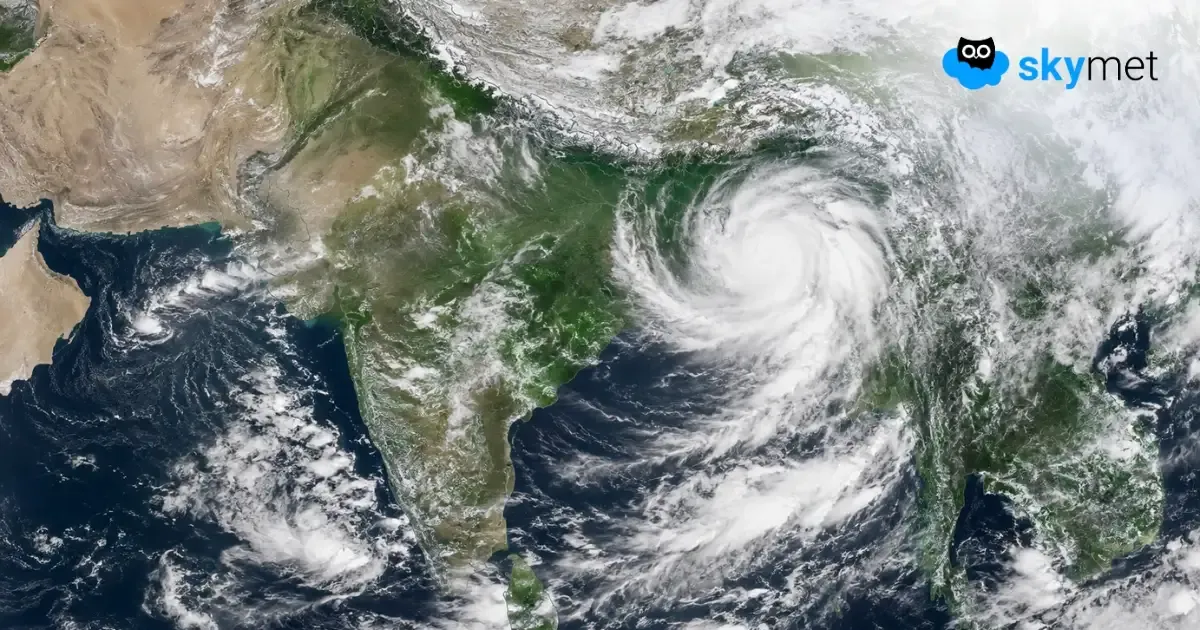
Contrastingly, the month of July acted as a saviour, but not without hiccups. While no monsoon system formed over the Indian seas in June, July followed with a trail of lows and depressions over the Bay of Bengal. Courtesy of these systems, the spatial and temporal distribution of rainfall improved, albeit not to the desired level, but a decent recovery was made over a large number of subdivisions. More so, the core monsoon rainfed zone fared satisfactorily, revitalizing the farming sector and helping catch up with the sowing figures of Kharif crops.
The month of July, the rainiest of the season and contributing about 32% of the monsoon rainfall, behaved against all the depressing hopes. The month outperformed, exceeding its normal rainfall target of 280.5 mm and finishing with 290.3 mm of rainfall, an excess of about 4%. The excess rainfall during the first week brought the 40% June deficit down to 14% by 09th July. However, a temporary break over the subsequent ten days raised the shortfall once again to 24% by 18th July 2026. The subsequent period of the month was a mix of rise and fall, but generally remained favourable, ending with a seasonal rainfall deficit of 13% halfway through the season. The month of July exceeded its normal rainfall for the fifth consecutive year, from 2022 to 2026.
The seasonal shortfall has reduced by another 1% and, as of 02nd August 2026, stands at 12% of the Long Period Average (LPA). The stakes now grow bigger for August. A shortfall of 12% rainfall midway through the season is difficult to recover. More so, when the outlook for at least the next ten days is not rosy. With the normal seasonal rainfall figure reaching 473 mm as of 03rd August, it becomes rather difficult to make a dent, either to increase or decrease the seasonal deficit. Though rainfall is expected to remain below the daily normal of about 9 mm for the next five days, the overall shortfall is likely to hover around 12%-13% till the end of the first week of August. There is a margin of 53.5 mm of rainfall to be covered to reach zero deficit, an absolutely daunting task to begin with. The month of August, as such, remains vulnerable to prolonged monsoon breaks, and so reducing the seasonal deficit will be an uphill task. Rather, the shortfall may rise, albeit by a small margin, till the middle of August.