India to Witness Final Phase of Total Lunar Eclipse on March 3; Check Visibility, Date, Time and More

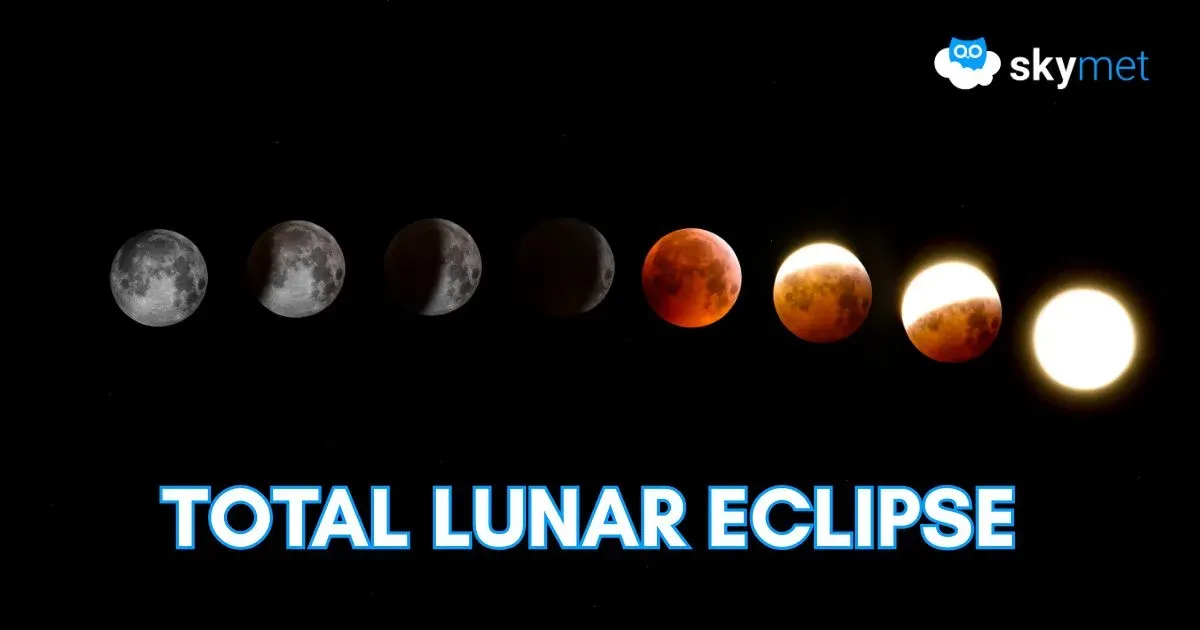
Key Takeaways:
- India will witness only the concluding stages of the total lunar eclipse on March 3, 2026.
- The total phase will occur from 4:34 p.m. to 5:33 p.m. IST but will not be fully visible across most of India.
- The eclipse has a magnitude of 1.155, indicating a deep total eclipse globally.
- The event coincides with Holi, making it calendrically notable.
India will witness a total lunar eclipse on March 3, 2026 (Tuesday). However, most parts of the country will see only the concluding phase of the celestial event, as the Moon will rise after the totality phase has already ended in many regions.
According to official timings, the eclipse will begin at 3:20 p.m. IST and end at 6:48 p.m. IST. The total phase — when the Moon passes completely through Earth’s darkest shadow — will last from 4:34 p.m. to 5:33 p.m. IST.
Visibility Across India
In Hyderabad, moonrise is expected at 6:22 p.m., providing a viewing window of approximately 26 minutes before the umbral phase concludes at 6:48 p.m. In Nalgonda district, the Moon is likely to rise around 6:19 p.m., allowing nearly 29 minutes of visibility.
Most parts of India will witness only the final partial or umbral stages at moonrise. However, parts of North-East India and the Andaman and Nicobar Islands may be able to observe the end of totality, as the Moon rises earlier in those regions.
Major cities including Delhi, Mumbai, Kolkata, Chennai and Bengaluru are expected to witness at least the later stages of the eclipse, subject to local weather conditions and horizon clarity.
Globally, the total lunar eclipse will be visible across large parts of eastern Asia, Australia, New Zealand, the Pacific region and parts of North and South America.
The magnitude of the eclipse is 1.155, indicating a deep passage of the Moon through Earth’s umbral shadow.
What Is a Lunar Eclipse?
A lunar eclipse occurs on a full moon day when Earth moves directly between the Sun and the Moon, causing Earth’s shadow to fall on the lunar surface. This alignment can only occur during a full moon.
Earth’s shadow consists of two parts:
- Umbra — the darker, central portion
- Penumbra — the lighter outer shadow
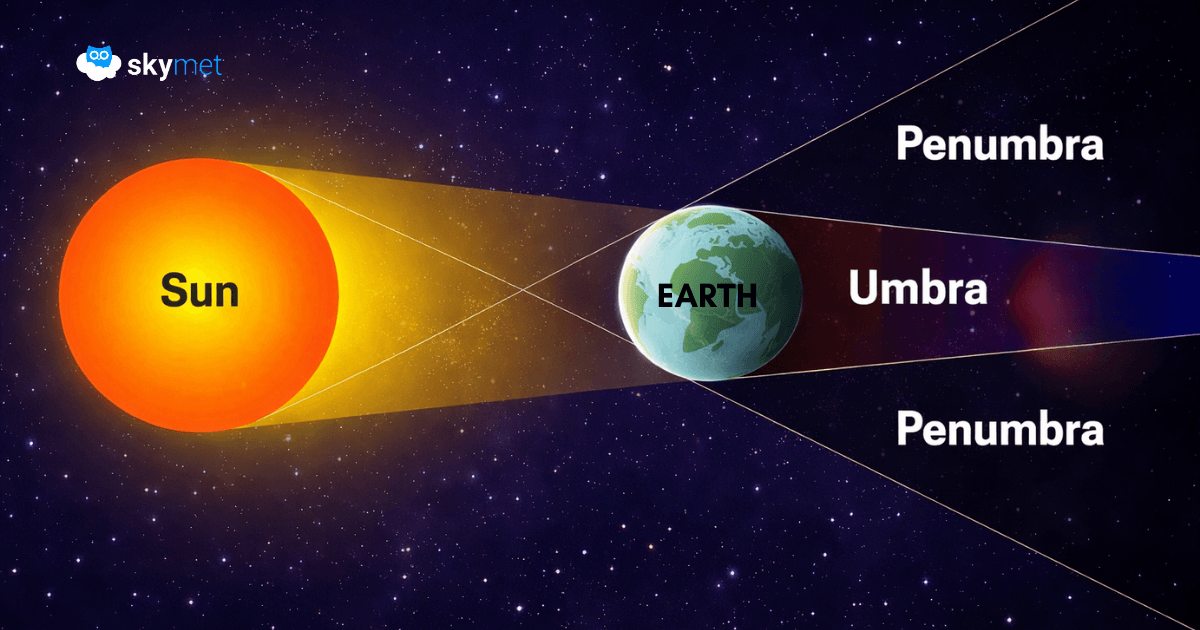
When the Moon passes fully through the umbra, a Total Lunar Eclipse occurs.
Total Lunar Eclipse
A total lunar eclipse takes place when the entire Moon enters Earth’s umbral shadow. During this phase, sunlight passing through Earth’s atmosphere reaches the Moon after being filtered and scattered.
On March 3, 2026, the total phase will occur between 4:34 p.m. and 5:33 p.m. IST. However, much of India will not see the complete totality phase due to the timing of moonrise.
Why Does the Moon Turn Red?
During totality, the Moon often appears reddish-orange, commonly referred to as a Blood Moon. This happens because Earth’s atmosphere scatters shorter wavelengths of light (blue light) while allowing longer red wavelengths to pass through and bend toward the Moon.
The effect is similar to the reddish color seen during sunrises and sunsets. As sunlight travels through Earth’s atmosphere, blue light is scattered in all directions, while red light continues onward and illuminates the eclipsed Moon.
Blood Moon – Total Lunar Eclipse
The term “Blood Moon” refers specifically to the red appearance of the Moon during a total lunar eclipse. The intensity of the red hue depends on atmospheric conditions, including dust, pollution and volcanic particles.
For the 2026 eclipse, astronomers note that the Moon will skim the upper edge of the umbra. Light passing through higher stratospheric layers, where dust concentration is typically lower, may slightly alter the observed coloration.
Ozone absorption, particularly through what are known as Chappuis absorption bands, can filter yellow and red wavelengths differently, potentially allowing subtle bluish or turquoise fringes near the shadow boundary.
Partial Lunar Eclipse
A partial lunar eclipse occurs when only a portion of the Moon enters Earth’s umbral shadow. Many regions of India will observe only this stage on March 3, as the Moon will rise while still partially eclipsed.
The visible period in cities like New Delhi and Noida is expected to be short, with the observable stage beginning after moonrise and ending around 6:48 p.m. IST.
Penumbral Lunar Eclipse
A penumbral lunar eclipse happens when the Moon passes only through Earth’s outer shadow (penumbra). This results in subtle dimming rather than dramatic darkening, and it can be difficult to notice with the naked eye.
The March 3 event includes penumbral phases before and after the partial and total stages.
Can I See a Lunar Eclipse?
Lunar eclipses are completely safe to observe with the naked eye. Unlike solar eclipses, they do not require protective filters.
Visibility depends on:
- Local moonrise timing
- Weather conditions
- Clear and unobstructed horizons
Rural locations with low light pollution generally provide better viewing contrast.
Eclipse Seasons
Eclipses occur during specific periods known as eclipse seasons, when the Sun is close to one of the two points where the Moon’s orbit crosses Earth’s orbital plane. Because the Moon’s orbit is tilted relative to Earth’s orbit around the Sun, eclipses do not happen every month.
Typically, between four and seven eclipses (solar and lunar combined) occur each year.
What Is a Tetrad?
A tetrad refers to a sequence of four consecutive total lunar eclipses occurring at six-month intervals without any partial eclipses in between. Tetrads are relatively rare and depend on long-term orbital cycles.
The March 3, 2026, eclipse is not part of a tetrad.
Magnitude of Eclipses
The magnitude of a lunar eclipse indicates how deeply the Moon passes into Earth’s umbra. A magnitude greater than 1 means the Moon is fully immersed in the umbra.
With a magnitude of 1.155, the March 3, 2026 eclipse represents a deep total eclipse globally, even though India will observe only its concluding stages.
When Is the Next Lunar Eclipse?
The next lunar eclipse visible from India will occur on July 6, 2028, and will be a partial lunar eclipse. The last total lunar eclipse visible from India took place on September 7–8, 2025.
What Makes This Lunar Eclipse Unique?
The March 3, 2026, total lunar eclipse coincides with Holi, which is celebrated on Phalguna Purnima, the full moon day of the Hindu month of Phalguna. The alignment of the eclipse with a major full-moon festival makes the event calendrically notable.
However, from an astronomical perspective, the event follows established orbital mechanics and eclipse cycles.
Trending: Holi 2026 to Be Rain-Free: State-Wise Weather Forecast for UP, Delhi, Rajasthan, Punjab and More