Cold Supermoon 2025: All You Need to Know About the Last Supermoon of the Year

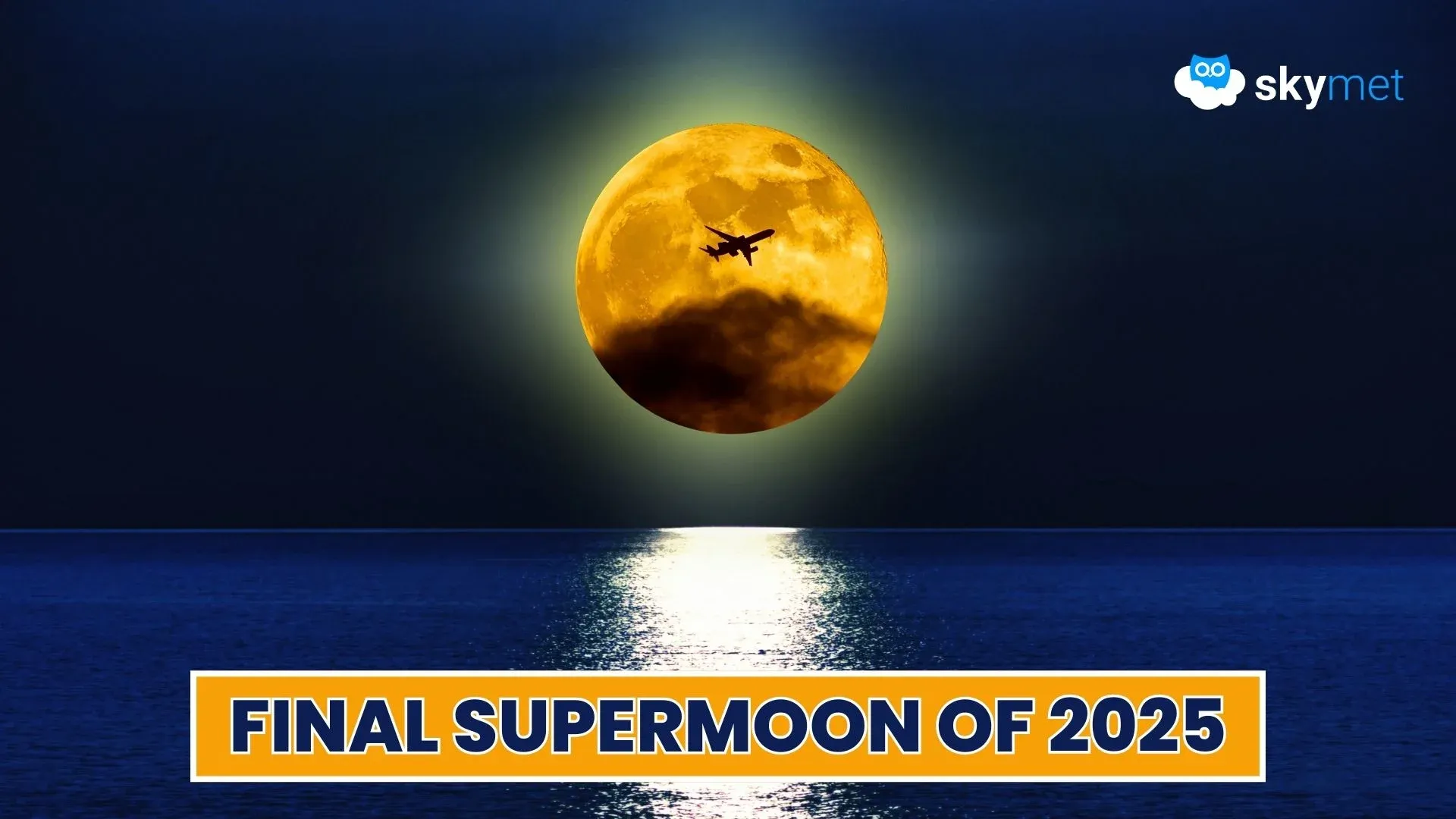
Image: AI-Skymet
Key Takeaways
- December 4 brings the final and second-largest supermoon of 2025, known as the Cold Moon.
- The Moon reaches perigee, appearing up to 14% larger and 30% brighter than usual.
- Clear skies and low pollution are essential for the best viewing and photography.
- The supermoon precedes the Geminid meteor shower, creating a week of major sky events.
Skywatchers are gearing up for one of the most striking celestial events of the year as the Cold Supermoon rises on December 4, 2025. This will be the third and final supermoon of 2025, and unusually, the second-largest of the year, glowing brighter and larger than most full moons thanks to its close pass near Earth.
The Moon reaches peak illumination at 6:15 PM, positioned in the Taurus zodiac—the domain of Venus, traditionally linked with shine, beauty and cosmic balance. While the Moon is fullest at dusk, its brilliance will be visible a day before and after, especially during the dramatic moonrise on December 5.
Why This Supermoon Stands Out?
A supermoon occurs when a full moon coincides with the Moon’s closest orbital point to Earth, known as perigee. During this alignment, the Moon can appear up to 14% larger and about 30% brighter than a typical full moon.
This December, the Moon will be about 222,000 miles from Earth—close enough to deliver a noticeably fuller, sharper disc. And with the winter solstice approaching, nights are long and dark, making the supermoon glow even more intensely.
Why It’s Called the Cold Moon?
The name “Cold Moon” arises from Indigenous North American traditions, particularly the Mohawk and Mohican peoples. It reflects the season’s chill, long nights and the beginning of deep winter.
Other traditional names include Long Night Moon, Winter Maker Moon, Snow Moon and The Moon When The Deer Shed Their Antlers.
How to Witness the Cold Supermoon?
To enjoy the supermoon at its best, preparation matters—especially in winter skies. First, find the perfect place to witness it and check the weather conditions. The sky should be clear and free from pollution. Stable visibility will make the Moon appear more detailed, brighter and easier to photograph.
Here’s how to maximise the experience:
- Choose an open spot facing the eastern horizon.
- Use binoculars or a telescope for detailed viewing.
- Smartphones or DSLRs can capture clear shots if the sky is clean
- Watch for the “moon illusion” at moonrise—when the Moon looks unusually large near the horizon.
When and Where to Watch
The Cold Supermoon rises on December 4, 2025, and remains visible throughout the night, setting in the early hours of December 5.
As it climbs, it forms a striking pattern with the Pleiades star cluster and the bright star Aldebaran, while Jupiter and Orion shine nearby—creating a sky full of reference points for stargazers.
A Cosmic Finale Before the Geminids
If you miss the supermoon, the sky still has gifts in store. Ten days later, the Geminid meteor shower peaks on December 13–14. By then, the Moon will have waned to a thin crescent, providing the perfect dark canvas for shooting stars.
Skymet’s Perspective
From an astronomical standpoint, the December Cold Supermoon is a masterclass in celestial mechanics—Earth, Moon and Sun aligning at just the right geometry to create a brighter, bigger lunar disc. From a cultural standpoint, it marks the traditional arrival of winter across hemispheres. For India, clear and stable early-December skies could offer some of the best viewing in the world.