Rajasthan and Madhya Pradesh Brace for Fresh Spell of Rain and Thunderstorms

Key Takeaways:
- Another western disturbance-like setup may affect Rajasthan and Madhya Pradesh from January 31.
- Light to scattered rain and thunderstorms are likely between January 31 and February 2.
- Isolated hailstorms may pose localized risks to standing crops.
- Rainfall will help improve soil moisture, aiding upcoming agricultural activities.
A strong western disturbance approached the Western Himalayan region on January 27, triggering heavy snowfall over the higher reaches. Along with this system, an induced cyclonic circulation developed over Northwest India, while moisture-laden winds from both the Arabian Sea and the Bay of Bengal continued to feed humidity into Northwest and Central India.
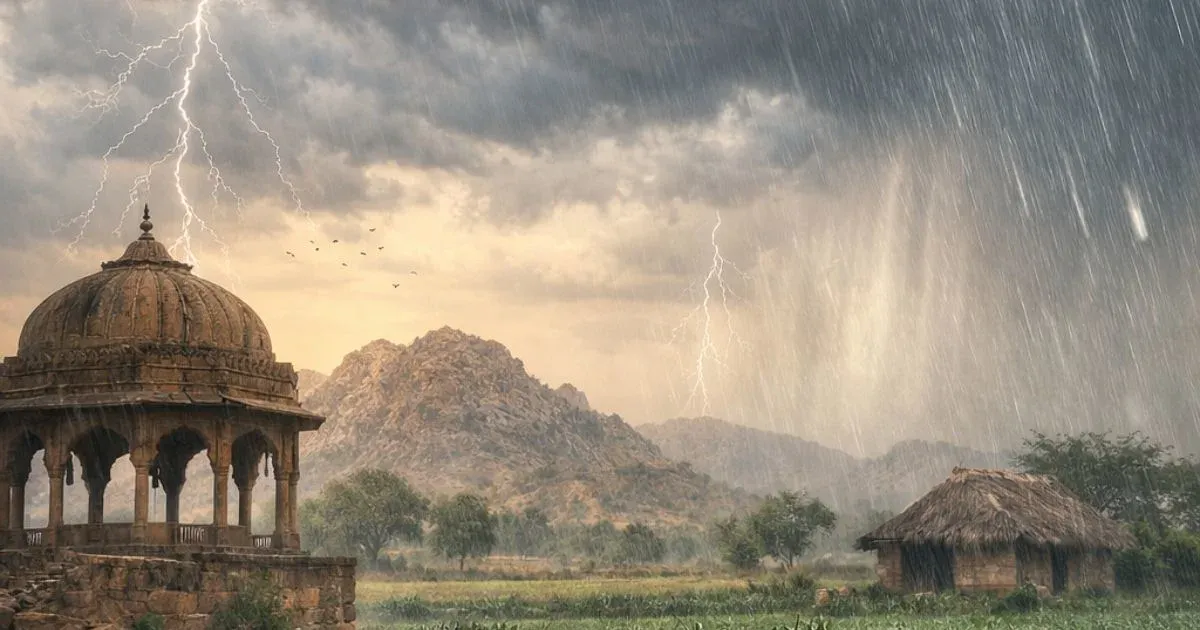
As a result, several parts of Rajasthan and the western districts of Madhya Pradesh experienced rainfall, thunderstorms, and hailstorms, leading to crop damage in some pockets.
Similar weather pattern expected from January 31
A similar synoptic setup is expected to develop again from January 31. However, the upcoming weather activity is not likely to be as intense as the previous spell. Still, light to scattered rain and thunderstorms are likely over Northeast Rajasthan and parts of Madhya Pradesh between January 31 and February 2.
Districts likely to be affected
Rajasthan districts:
Churu, Jhunjhunu, Sikar, Jaipur, Alwar, Dausa, Bharatpur, Dholpur, Karauli, Sawai Madhopur, Tonk
These areas may witness rain, thunderstorms, and isolated hailstorms.
Madhya Pradesh districts:
Gwalior, Bhind, Shivpuri, Guna, Ashoknagar, Rajgarh, Vidisha, Sagar, Tikamgarh, Chhatarpur, Damoh, Shajapur, Bhopal, Dewas, Sehore, Raisen
These districts are also likely to experience rain and thunderstorm activity.
Impact on agriculture
Although the intensity of rain and thunderstorms is not expected to be high, there remains a risk of localized crop damage, particularly due to isolated hail events. At the same time, the rainfall will help improve soil moisture levels, which can be beneficial for upcoming rabi and summer crops.
Overall, this weather system may bring mixed impacts—short-term risk for standing crops, but longer-term benefits for soil moisture replenishment and agricultural preparation.